

5 Powerful Benefits of Social Media Marketing for Business
Do you ever toss and turn at night, pondering if diving into social media marketing is a smart move? Well, we’ve got some great news for you. Social media marketing can be an absolute game changer for your business. This post explains the benefits of social media marketing for business and why you should embrace it for your brand.
1. Increasing Brand Awareness
Social media marketing is hugely beneficial for businesses looking to increase brand awareness. It’s not just about posting pretty pictures and witty captions. It’s a strategic approach to getting your brand in front of the right people at the right time.
And the best part? It works. According to Sprout Social, 90% of marketers say that social media has increased their business exposure. That’s huge!
How Social Media Helps Build Brand Identity
Your brand identity is what sets you apart from the competition. It’s the personality, values, and voice that make your business unique. And social media is the perfect platform to showcase that identity.
By consistently posting content that aligns with your brand’s messaging and aesthetic, you’re building a recognizable presence that people will start associating with your business. It’s like having a 24/7 billboard that showcases who you are and what you stand for.
Strategies for Maximizing Brand Visibility on Social Media Platforms
But just having a presence on social media isn’t enough. You need to be strategic about how you’re using each platform to maximize your brand’s visibility.
One way to do this is by using relevant hashtags in your posts. Hashtags are like a filing system for social media. They make it easier for people to find content related to specific topics. By using hashtags that are relevant to your industry and target audience, you’re making it easier for potential customers to discover your brand.
Another strategy is to engage with your followers and other accounts in your industry. Respond to comments, ask questions, and share other people’s content. By being an active participant in the social media community, you’re increasing the chances that people will see and remember your brand.
Paid Social Media Advertising Tactics to Boost Brand Awareness
Of course, organic reach on social media can only take you so far. That’s where paid social media advertising comes in.
Platforms like Facebook, Instagram, and Twitter offer robust advertising options that allow you to target specific demographics, interests, and behaviors. By creating ads that are visually appealing and speak directly to your target audience, you can significantly boost your brand’s visibility and reach.
But it’s not just about throwing money at the problem. You need to be strategic about your ad targeting and messaging to ensure that you’re getting the most bang for your buck. That means testing different ad formats, targeting options, and messaging to see what resonates best with your audience.
2. Driving Website Traffic and Generating Leads
Social media isn’t just about building brand awareness. It’s also a powerful tool for driving website traffic and generating leads. By optimizing your social media profiles and creating compelling content, you can turn your followers into website visitors and potential customers.
Optimizing Social Media Profiles for Higher Click-Through Rates
Your social media profiles are often the first point of contact that potential customers have with your brand. That’s why it’s so important to optimize them for click-throughs to your website.
One way to do this is by including a clear call-to-action (CTA) in your profile bio. Whether it’s “Shop Now,” “Learn More,” or “Sign Up,” a strong CTA can encourage people to click through to your website and take action.
Also, make sure your profile includes a link to your website and that the link is prominently displayed. Don’t make people hunt for it. Make it easy for them to find and click.
Creating Compelling Content to Encourage Website Visits
Of course, getting people to click through to your website is only half the battle. You also need to create content that encourages them to stay and explore.
One way to do this is by creating blog posts, videos, or other types of content that provide value to your target audience. Whether it’s educational, entertaining, or both, your content should give people a reason to visit your site and stay awhile.
You can also use social media to tease your website content and encourage people to click through for more. For example, you could share a snippet of a blog post on Twitter with a link to the full article on your website. Or you could create a short video that teases a longer video on your website.
Leveraging Social Media Advertising for Targeted Traffic
Just like with brand awareness, paid social media advertising can be a powerful tool for driving targeted traffic to your website.
By creating ads specifically designed to drive website clicks and conversions, you can reach people who are most likely to be interested in your products or services. You can target based on demographics, interests, behaviors, and more to ensure that your ads are reaching the right people at the right time.
But again, it’s not just about throwing money at the problem. You need to create ads that are compelling and relevant to your target audience. That means using eye-catching visuals, clear messaging, and strong CTAs that encourage people to click through to your website.
3. Enhancing Customer Engagement and Building Relationships
Social media isn’t a one-way street. It’s a conversation. By practicing strong social media engagement and building relationships with your followers you can turn them into loyal customers and brand advocates.
Responding to Customer Inquiries and Complaints on Social Media
One of the most important aspects of social media engagement is responding to customer inquiries and complaints in a timely and professional manner. When someone reaches out to your brand on social media, they expect a response — quickly.
By monitoring your social media channels regularly and responding promptly to any questions or concerns, you’re showing customers that you value their feedback and are committed to providing excellent customer service. This can go a long way in building trust and loyalty with your audience.
Encouraging User-Generated Content and Reviews
Another way to enhance customer engagement on social media is by encouraging user-generated content (UGC) and reviews. When your customers post about your brand on their own social media channels, it’s like free advertising, and it’s often more authentic and trustworthy than anything you could create yourself.
You can encourage UGC by running social media contests, creating branded hashtags, or simply asking your followers to share their experiences with your brand.
You can also encourage reviews by providing excellent customer service and following up with customers after their purchase to ask for feedback.
Hosting Social Media Contests and Giveaways to Boost Engagement
Finally, hosting social media contests and giveaways can be a great way to boost engagement and build excitement around your brand. People love the chance to win something, and a well-designed contest can generate a lot of buzz and participation.
When creating a social media contest or giveaway, make sure to:
- Set clear rules and guidelines
- Choose a prize that’s relevant to your target audience
- Promote the contest across all of your social media channels
- Encourage people to share the contest with others
Social media is a powerful tool for businesses of all sizes. By building brand awareness, driving website traffic, generating leads, and enhancing customer engagement, you can use social media to grow your business and achieve your marketing goals. But it’s not a set-it-and-forget-it strategy.
Reaping the benefits of social media marketing for business requires ongoing effort, creativity, and optimization to truly succeed. So roll up your sleeves, get to know your audience, and start creating content that resonates with them. The results will speak for themselves.
4. Gaining Valuable Insights and Making Data-Driven Decisions With Social Media Analytics
You’re struggling to measure the success of your social media marketing strategy. What are you missing?
Social media analytics. That’s what.
Setting Up and Interpreting Social Media Analytics Dashboards
Most social media platforms offer built-in analytics tools that provide valuable insights into audience demographics, engagement rates, and content performance. By setting up and regularly monitoring these dashboards, businesses can gain a deeper understanding of their followers’ preferences, behaviors, and interactions with their brand.
You can then use this data to refine content strategies, optimize ad targeting, and make informed decisions about future marketing efforts. For example, you can use Google Analytics to measure your most triumphant social media marketing techniques, as well as determine which strategies are better off abandoned.
Attach tracking tags to your social media marketing campaigns so you can monitor them properly. Be sure to use the analytics within each social platform for even more insight into which of your social content is performing best with your audience.
Conducting Competitor Analysis on Social Media Performance
You can also use social media analytics to track and analyze competitors’ performance, providing valuable benchmarking data and identifying opportunities for differentiation. By monitoring metrics such as follower growth, engagement rates, and top-performing content, you can gain insights into industry trends and adjust your own strategies accordingly.
For example, a competitive analysis might reveal that a competitor’s behind-the-scenes content is driving high engagement. Armed with this insight, a business could adapt its own social media strategy to incorporate more authentic, backstage glimpses to connect with its audience.
Making Informed Business Decisions Based on Social Media Data
The insights gained from social media analytics can help businesses make data-driven decisions across various aspects of their operations. For example, identifying top-performing content themes can inform product development, while understanding audience demographics can guide expansion into new markets.
By leveraging social media data, you can optimize your strategies, allocate resources more effectively, and ultimately drive better business results. The key is to establish a consistent flow of social data and insights throughout the organization, empowering teams beyond just marketing to make informed decisions based on real-time market feedback.
As Social Media Examiner notes:
“Social media’s impact has expanded well beyond marketing, touching nearly every corner of a business. More teams, from customer service to product development, benefit from the rich market insights the channel can provide.”
5. Establishing Thought Leadership and Building Credibility
Want to be known as the go-to expert in your industry? Want to build trust and credibility with your audience?
Social media can help you do just that. But it’s not about constantly tooting your own horn or pushing your products. It’s about providing value, insights, and expertise that genuinely help your followers.
Sharing Industry Insights and Trends on Social Media
One of the most effective ways to establish thought leadership is by consistently sharing industry insights, trends, and best practices on social media. This could take the form of blog posts, whitepapers, webinars, or even threads on X and LinkedIn articles.
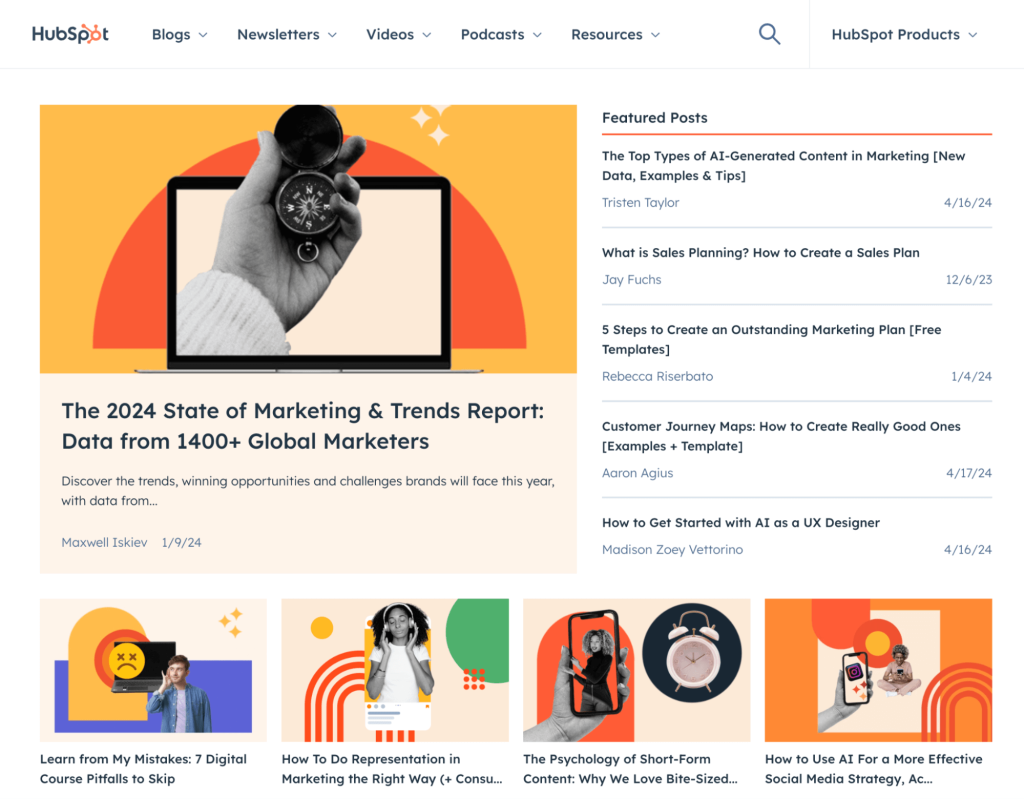
The key is to provide valuable, well-researched content that demonstrates your deep understanding of your field. By educating and informing your audience, you position yourself as a trusted resource and authority.For example, HubSpot has built a strong reputation as a marketing thought leader through its blog content, which covers a wide range of industry topics and often features expert insights from its own team and guest contributors.
Collaborating With Influencers to Expand Reach and Credibility
Partnering with respected influencers in your industry can help amplify your thought leadership content and lend additional credibility to your brand. This could involve co-creating content, hosting joint webinars or events, or securing influencer endorsements and testimonials.
By aligning yourself with established experts, you tap into their audience and benefit from their reputation and authority. Just be sure to choose influencers who align with your brand values and whose audiences overlap with your own target market.
Showcasing Company Culture and Values on Social Media
Thought leadership isn’t just about sharing industry expertise. It’s also about giving your audience a behind-the-scenes look at your company’s culture and values. By showcasing your team, your mission, and your brand personality on social media, you humanize your business and build deeper connections with your followers.
This could include employee spotlights, behind-the-scenes photos and videos, or posts that highlight your company’s social responsibility initiatives. The goal is to give your audience a sense of who you are as an organization and what you stand for.
For example, outdoor retailer REI often shares user-generated content and stories that align with its mission of promoting environmental stewardship and active lifestyles. By consistently communicating its brand values, REI has built a loyal community of followers who see the company as more than just a place to buy gear.

Maximizing ROI and Measuring the Success of Social Media Marketing Efforts
Is your social media marketing actually driving results for your business? Or are you just spinning your wheels, creating content without any clear purpose or payoff?
To maximize the return on your social media investment, you need to set clear goals, track the right metrics, and continuously optimize your strategy based on data-driven insights.
Setting Clear Goals and KPIs for Social Media Campaigns
The first step in measuring social media success is setting specific, measurable goals that align with your overall business objectives. These could include increasing brand awareness, driving website traffic, generating leads, or boosting customer engagement.
Once you’ve defined your goals, identify the key performance indicators (KPIs) that will help you track progress. For example, if your goal is to increase brand awareness, relevant KPIs might include follower growth, reach, and social mentions.
By setting clear targets and benchmarks, you can more effectively measure the impact of your social media efforts and make data-driven decisions about where to focus your resources.
Tracking and Analyzing Key Social Media Metrics
With your goals and KPIs in place, it’s time to start tracking and analyzing your social media performance. This involves regularly monitoring metrics like engagement rates, click-through rates, conversion rates, and sentiment analysis.
Tools like Twitter Analytics, Facebook Insights, and Instagram Insights provide valuable data on audience demographics, post performance, and more. Third-party analytics platforms like Sprout Social and Hootsuite can also help you track and analyze metrics across multiple social networks in one centralized dashboard.
The key is to regularly review your analytics, identify trends and patterns, and use those insights to continuously refine and optimize your social media strategy.
Calculating the ROI of Social Media Marketing Investments
Ultimately, the success of your social media marketing efforts comes down to one key question: are they driving a positive return on investment (ROI) for your business?
To calculate social media ROI, you’ll need to track the costs associated with your social media activities (including staff time, content creation, and ad spend) and measure them against the tangible business outcomes they generate (such as leads, sales, or customer loyalty).
While some social media benefits (like brand awareness) can be harder to quantify, assigning values to your KPIs can help you better understand the full impact of your efforts. For example, you might assign a dollar value to each new lead generated through social media based on your average lead-to-customer conversion rate and customer lifetime value.
By consistently tracking and analyzing your social media ROI, you can more effectively justify your marketing spend and make data-driven decisions about where to allocate your budget for maximum impact.
As the Buffer team puts it:
“Having a clear picture of the ROI for each social network can help you better understand where to focus your efforts and how to allocate your budget. It’s the key to making sure your social media efforts are making a positive impact on your company’s bottom line.”
Experience the Benefits of Social Media Marketing for Business with MYMA
Any business dreaming of success today can’t overlook social media marketing. It’s your golden ticket in the digital world. Imagine turning every like, share, and comment on social media into a stepping stone toward making your brand more visible than ever before. Not only does this drive folks directly to your doorstep (aka: website), but it also lets you forge strong connections along the way.
For a win in social media marketing, be genuine. Add regular updates to the mix, and always think of what your audience needs first. With a solid strategy and a commitment to delivering value, you can harness the incredible benefits of social media marketing for your business.
Need help managing social media to reap the benefits? My Marketing Assistant is here for you. We can handle your social media while you focus on your business. Get started today!